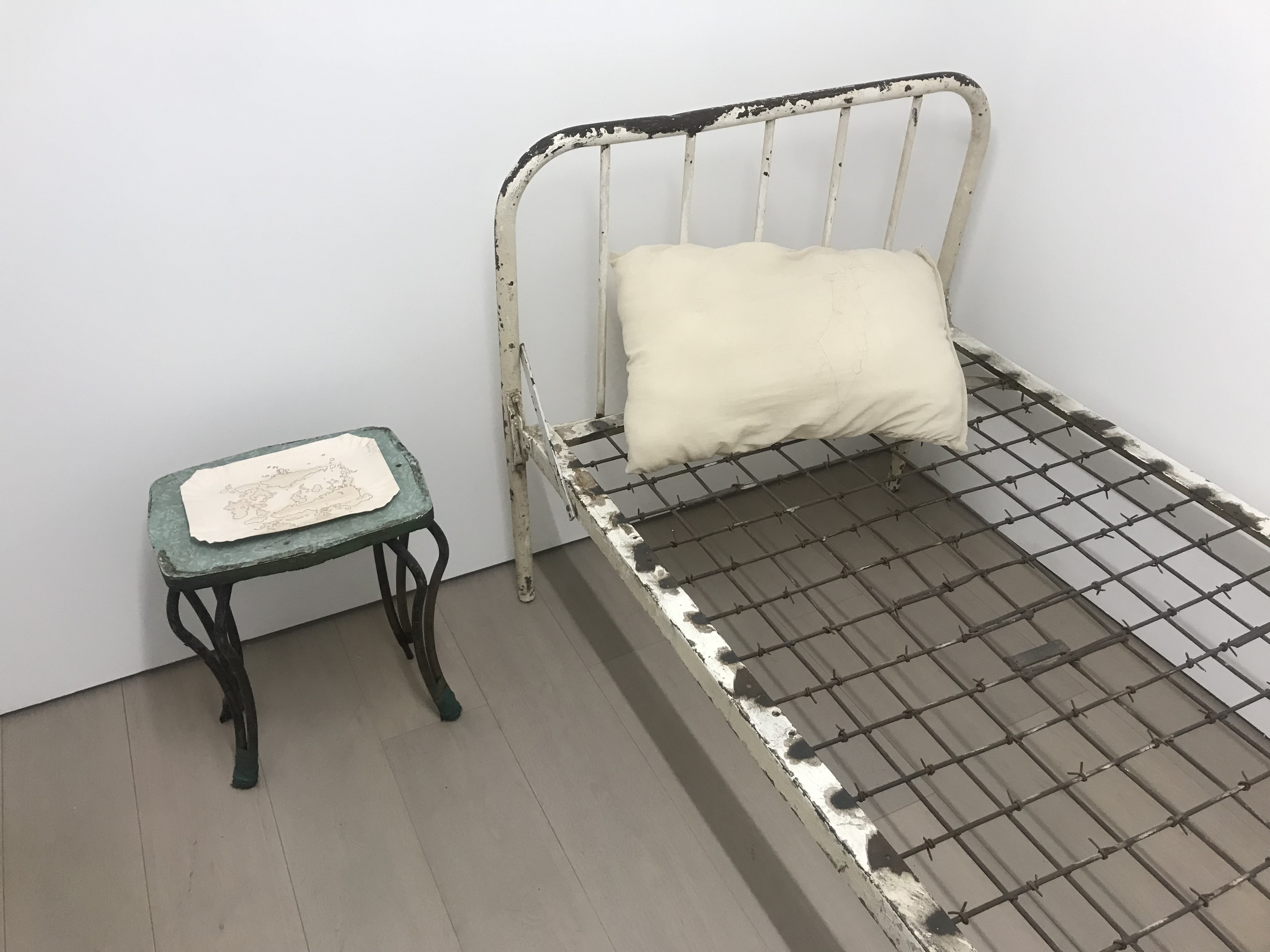
Mona Hatoum
interior landscape, 2008
this installation was created during a residency at the Darat al Funun in
Amman, Jordan, a city with a significant Palestinian population. Hatom
recalls taht the installation came together through a series of
coincidences and accidental discoveries that occurred during her
month-long stay: "it was as if the work created itself."
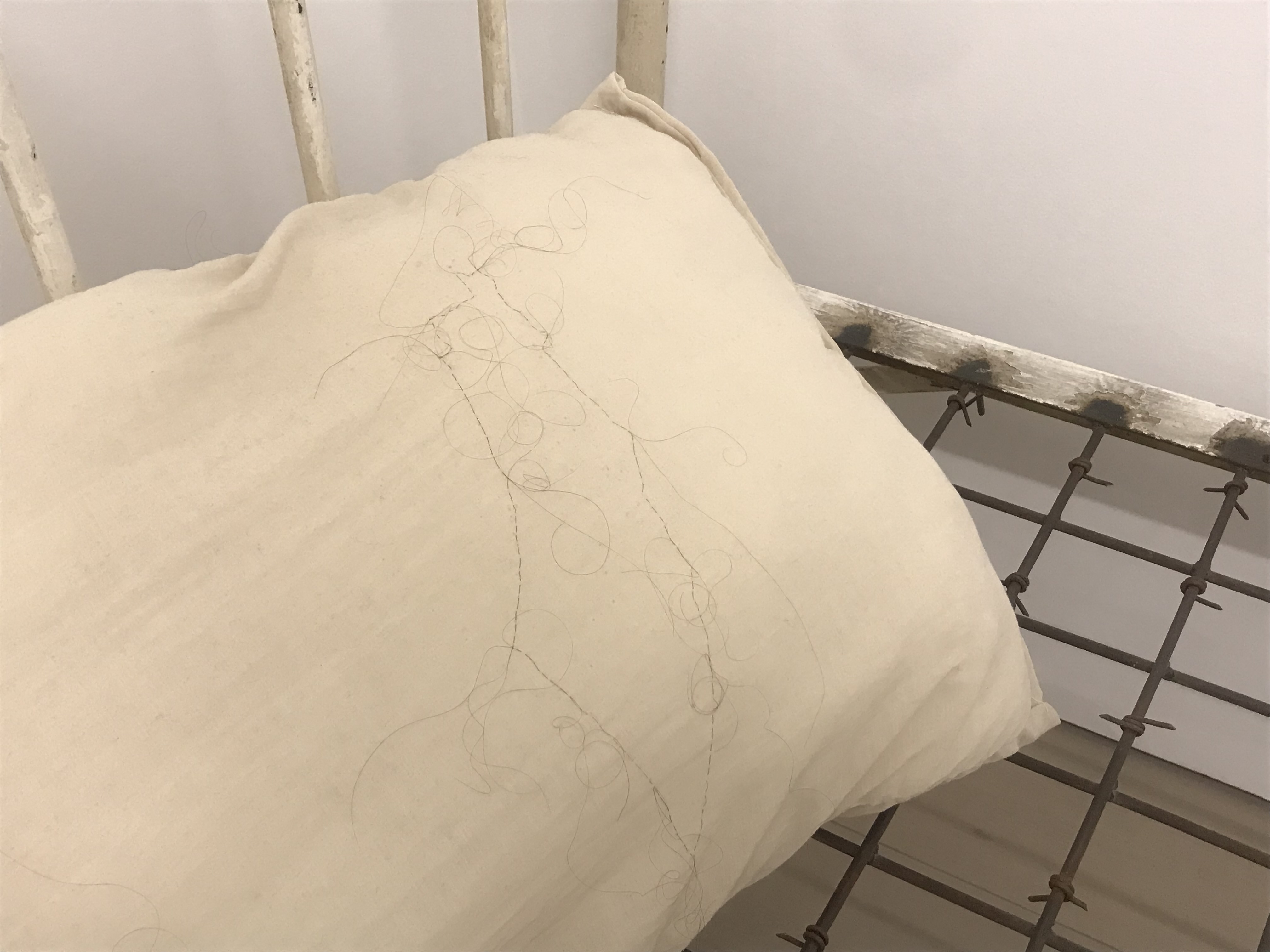
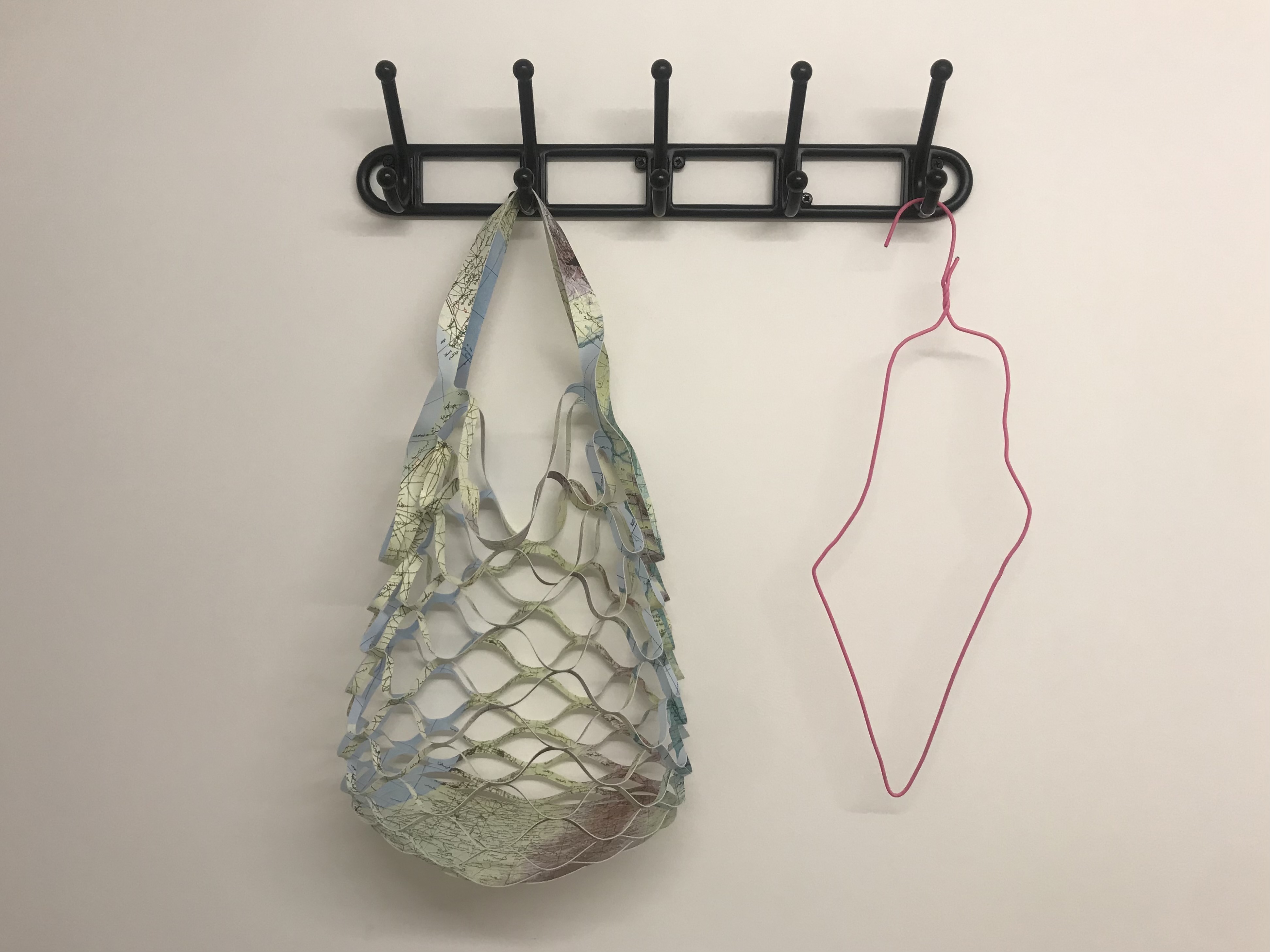
the historical map of Palestine appears in this 'room' in a number of
guises: embroidered in human hair on the pillow; outlined by a distorted
clothes hanger; and printed on a bag made from a cut-up historical map
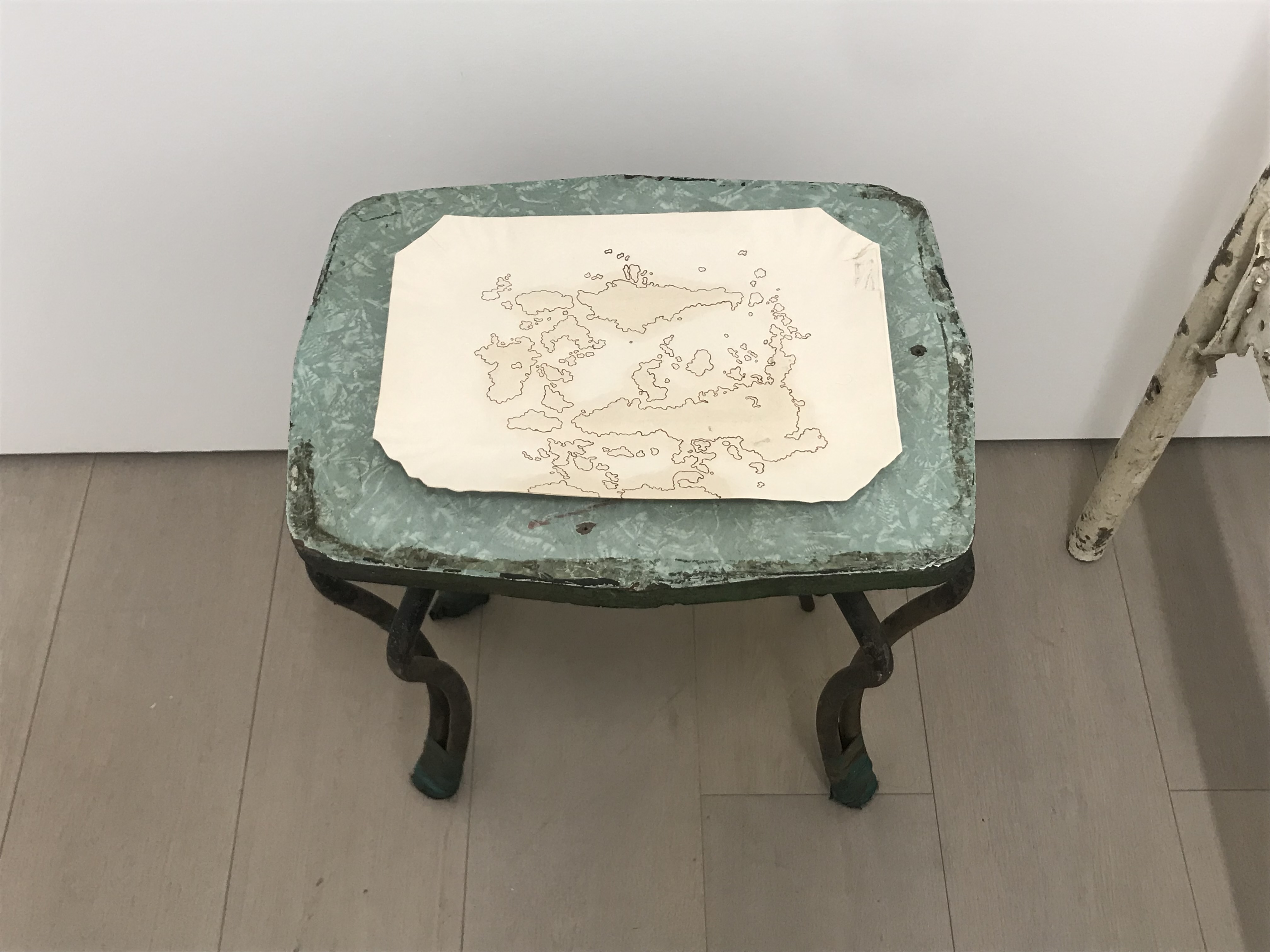
which uses the original Arabic names of towns and villages. on the bedside
table, Hatoum has placed a take-away food tray. its grease stains,
carefully outlined in pen, resemble a fragmented map.
Hatoum upends our emotional and psychological expecatations. instead of
providing comfort, warmth, and rest, this room is a sterile cell-like
space which evokes entrapment and terror.
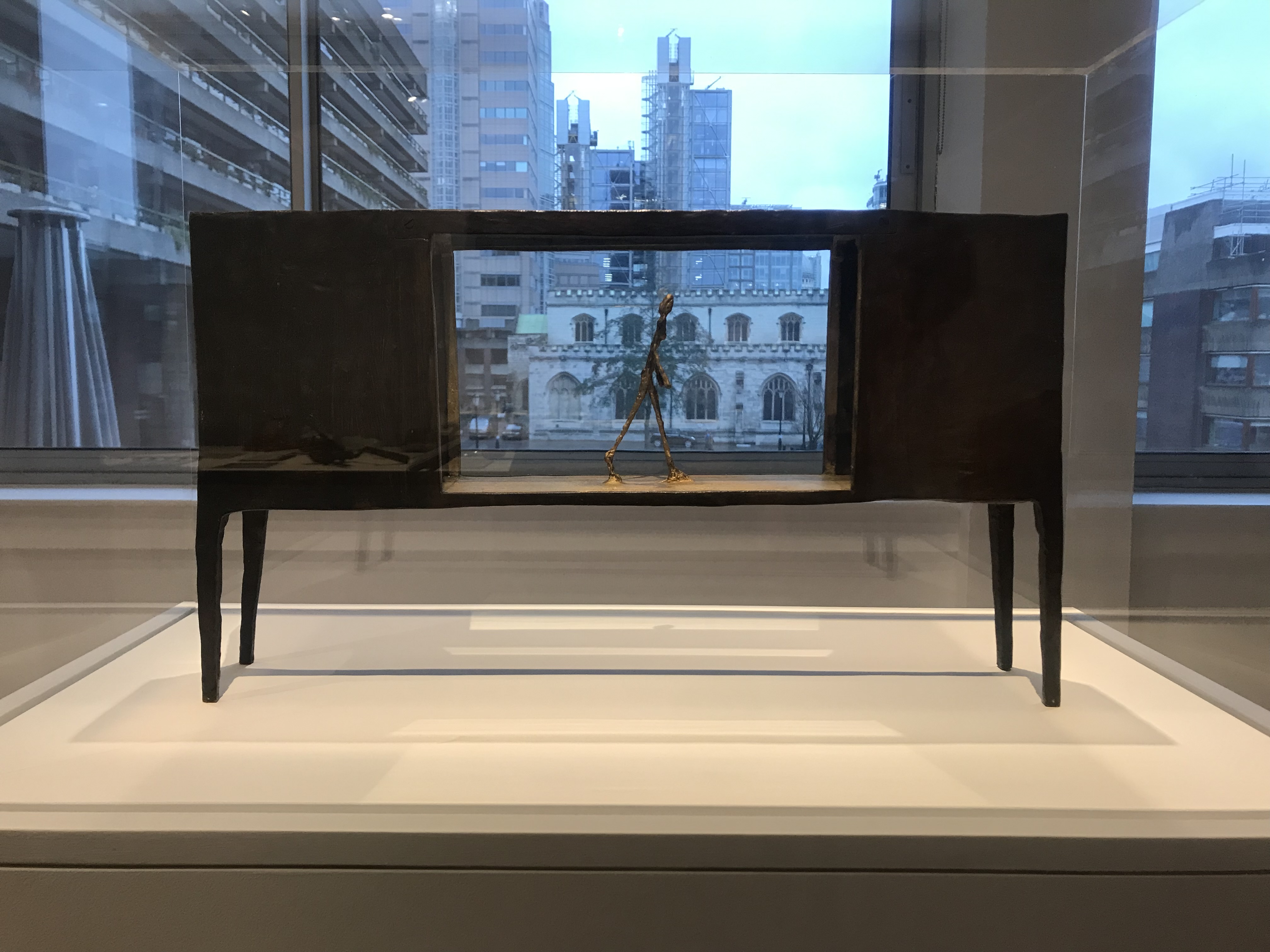
Alberto Giacometti
figurine between two houses, 1950
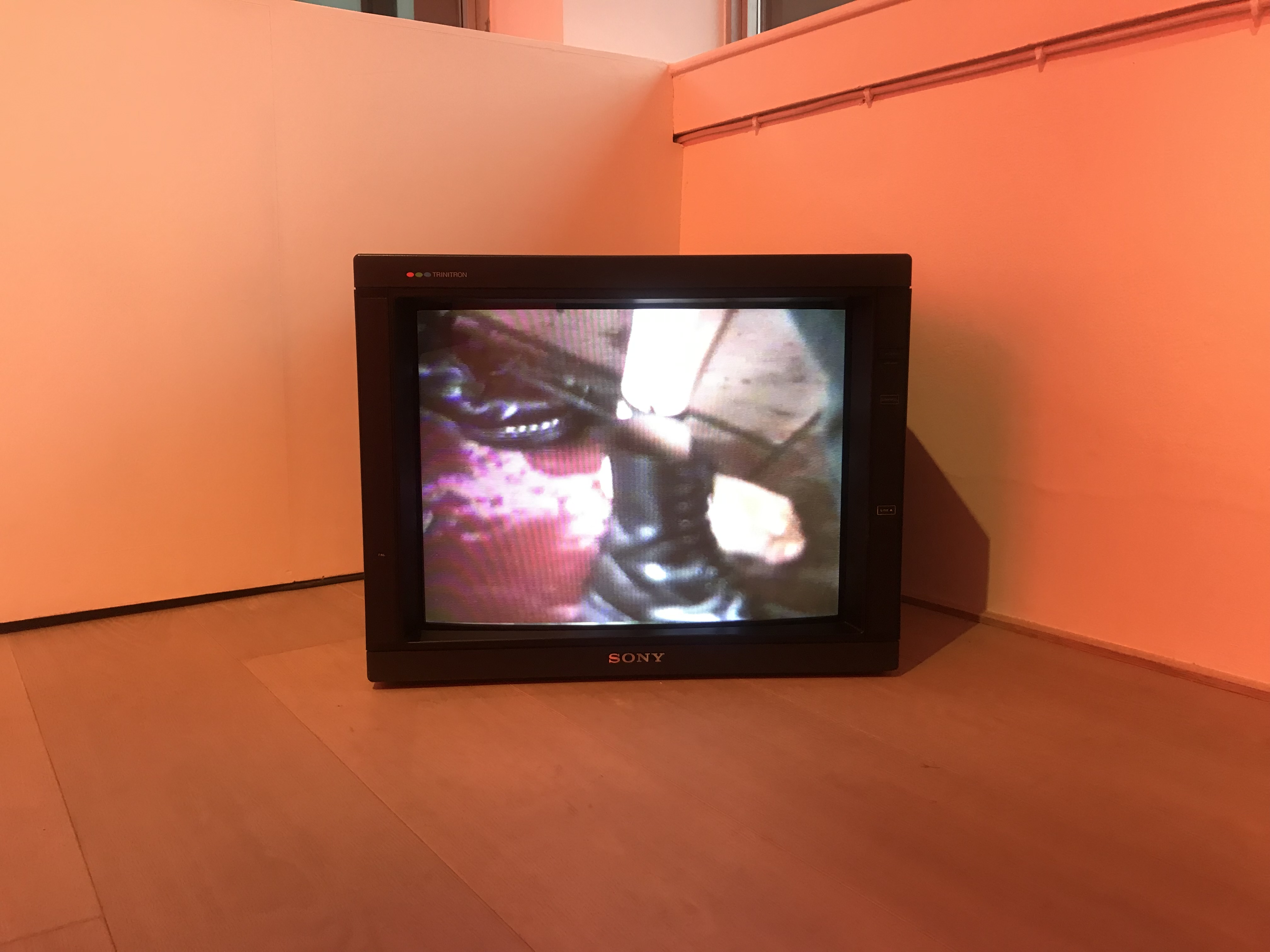
Mona Hatoum
roadworks, 1985
after the second world war, Giacometti began experimenting with walking
figures on bases as he observed people on the street "coming and going -
unconscious and mechanical... each having an air of moving on its own,
quite alone". in this work, the solidity and scale of the two boxes in
relation to the diminutive female figure imparts a sense of alienation and
imprisonment.
nearby, Hatoum's roadworks documents a performance in which the artist
walked barefoot through Brixton's streets with a pair of large dr.martens
boots tied to her ankles. in the 1980s, Brixton was the site of a series
of race riots and was heavily policed. as Hatoum walks, her footsteps are
shadowed by the boots which, in their association with far-right skinhead
movements and the police, appear menacing and surreal.